Modern electronic devices are becoming lighter, faster, and more dependent on USB-C charging. Smartphones, tablets, wireless earbuds, handheld game consoles, power banks, and USB-C laptops now follow users through offices, airports, classrooms, cars, and outdoor workspaces. In this environment, charging speed is only part of the problem. The more common issue is simple: a charging cable is often not available when it is needed most.
A lanyard charging cable solves this problem by turning a cable into an everyday carry accessory. Instead of staying tangled inside a bag or forgotten on a desk, it can be attached to an ID holder, backpack, keychain, phone strap, or portable gear.
What Is a Lanyard Charging Cable?
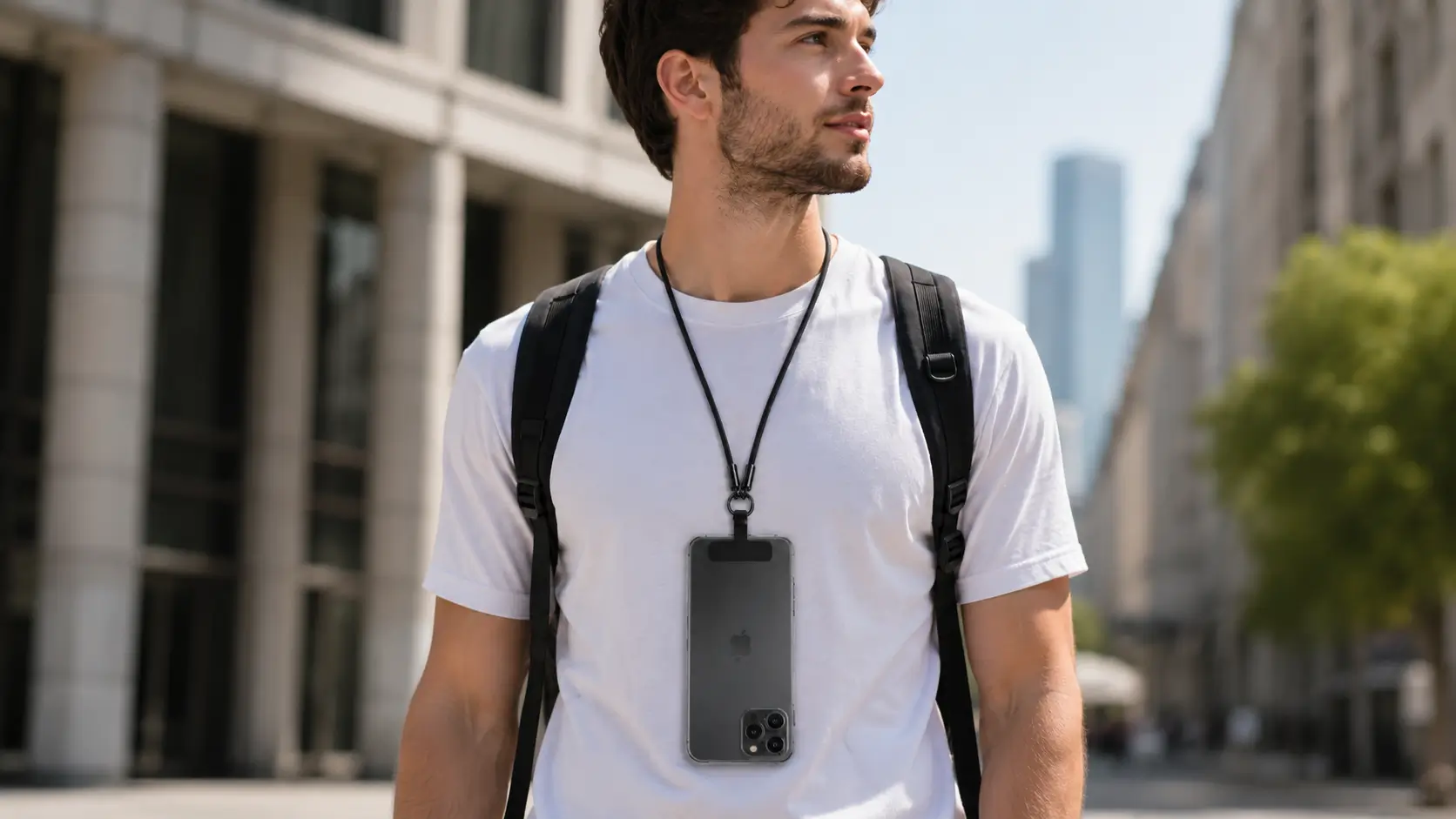
A lanyard charging cable is a charging cable designed with a wearable or attachable structure. Unlike a standard cable that mainly stays on a desk or beside a wall charger, a lanyard cable is built for movement. It usually integrates a short cable body, reinforced connectors, and a clasp or strap design that allows it to be carried like an accessory.
The idea is straightforward but highly practical. When paired with a power bank, laptop, car charger, GaN charger, or USB-C power adapter, the cable can provide quick charging without requiring users to search through a bag. For office workers, commuters, students, event staff, and business travelers, this can make daily charging more efficient.
A lanyard charging cable is not intended to replace every cable in a workstation. A longer cable is still better for bedside charging or fixed desktop setups. However, for emergency charging and portable use, a short wearable cable is often more convenient.
Why USB-C Makes Lanyard Charging Cables More Valuable
The rise of USB-C has made lanyard charging cables more useful than older connector-based accessories. USB-C is reversible, compact, and widely adopted across consumer electronics. It supports power delivery, data transfer, and in some cases, video output, depending on the cable and connected device.
For charging-focused accessories, USB-C Power Delivery is especially important. A well-designed USB-C lanyard charging cable can support much higher power than older mobile cables, allowing it to charge more than just smartphones. With proper power support, it can also work with tablets, portable monitors, power banks, and compatible laptops.
Key Benefits of a Lanyard Charging Cable
1. Always Ready for Emergency Charging
The strongest advantage of a lanyard charging cable is availability. Many users carry a power bank but forget the cable. Others keep a charger at the office but do not have a cable in a meeting room, airport lounge, or car. A wearable cable reduces this problem by staying attached to daily gear.
2. Less Cable Clutter
Traditional long cables can become tangled in backpacks or create messy desktop setups. A compact lanyard charging cable is more suitable for close-range charging between a phone and a power bank, a laptop and a phone, or a desktop charger and tablet. The short length keeps the setup tidy and reduces unnecessary cable drag.
3. Better Everyday Carry Design
A good lanyard cable is not just a cable with a loop added. It must be designed to withstand repeated handling, bending, pulling, and clipping. The clasp, connector shell, and cable jacket all need to be durable enough for daily movement. This makes material selection an important part of product quality.
4. Practical for Multiple Scenarios
In office work, it can be attached to an ID card holder. During travel, it can clip to a backpack or portable charger pouch. On campus, it can be carried with keys or student access cards. For outdoor or mobile workers, it can stay with a field bag or tool kit.
Product Example: VCOM CU502C USB-C to USB-C Lanyard Charging Cable
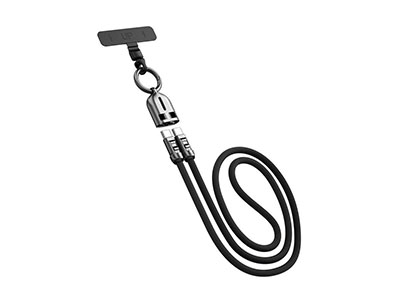
The VCOM CU502C is a strong example of a modern lanyard charging cable built for practical high-power charging. It uses a USB-C male to USB-C male design and supports PD 3.1 fast charging up to 240W. This makes it suitable for smartphones, tablets, USB-C laptops, and other high-power USB-C devices when used with a compatible charger and device.
The 0.3m cable length is intentionally compact. It is long enough for power-bank charging or close desktop connections, but short enough to reduce clutter. This length is especially useful for commuting, travel, business meetings, exhibitions, and other mobile scenarios where a full-length cable is not always convenient.
The CU502C also supports USB 2.0 data syncing up to 480Mbps. This is suitable for light file transfer, device recognition, and basic syncing tasks.
Lanyard Charging Cable vs. Standard USB-C Cable
A standard USB-C cable is still the best choice for fixed charging stations, long-distance use, monitor connections, docking stations, or high-speed data transfer. It offers more length and, depending on the model, may support advanced display or data functions.
A lanyard charging cable serves a different purpose. It is designed for portability, quick access, and everyday backup charging. Its value is not only electrical performance but also carrying convenience. For many users, the best setup is to keep a standard cable at home or the office and carry a lanyard cable for mobile use.
What to Check Before Buying
When choosing a lanyard charging cable, users should first check the charging wattage. Not every USB-C cable supports laptop charging, and not every cable is rated for high-power PD charging. Next, the connector type should be confirmed. USB-C to USB-C is ideal for modern USB-C chargers and devices, while other connector types may be limited to specific products.
Cable length also matters. A short cable is excellent for portability, but it may not be suitable for charging from a distant wall socket. Data speed should be reviewed as well. If the main need is charging, USB 2.0 syncing may be enough. If a large data transfer is required, a higher-speed USB-C cable is more appropriate.
Finally, build quality should not be ignored. A wearable cable needs a strong clasp, reinforced housing, quality conductors, and a durable exterior. Low-quality cables may loosen, fray, overheat, or fail after repeated use.
Tag:Charging Cable


Related Products
 | |
| USB-C to USB-C Lanyard Cable | |
 |  |